
Think about the first things that come to mind when you picture the color pink — you’ll often think of flowers, cotton candy, flamingos, bubblegum, and lipstick. And what feelings does the color evoke in your mind when you see pink? Most of the time, they’re love, femininity, romance, playfulness, and even a sense of childhood innocence. But there’s much more to the color pink than these familiar associations. In this article, we’ll explore pink color psychology, its history, cultural differences, how it shapes our decisions, the emotions it evokes, and how you can use this color effectively in branding and marketing.
Table of Contents
The Origin of Pink: How the Color Evolved Through History
It might sound odd at first, but pink is one of the oldest colors on Earth. In 2018, scientists discovered vivid pink pigments inside 1.1-billion-year-old rocks, produced by cyanobacteria that once thrived across prehistoric oceans. Ancient Egyptians and Romans were among the first civilizations to use pink tones, applying pink ochre in their wall paintings and decorative art. By around 800 BCE, pink had also entered literature. In Homer’s Odyssey, dawn is famously described as “rosy-fingered,” one of the earliest poetic references to a pink hue.
During the medieval period, Pink didn’t exist as its own named color; instead, a wide range of pinkish shades was grouped under the broader category of “red.” It wasn’t until the Renaissance (14th–17th century) that the idea of pink began to take shape. Painters started mixing red and white to create softer skin tones for portraits. Raphael often used these tender hues to express warmth and intimacy — Madonna of the Pinks is a beautiful example.
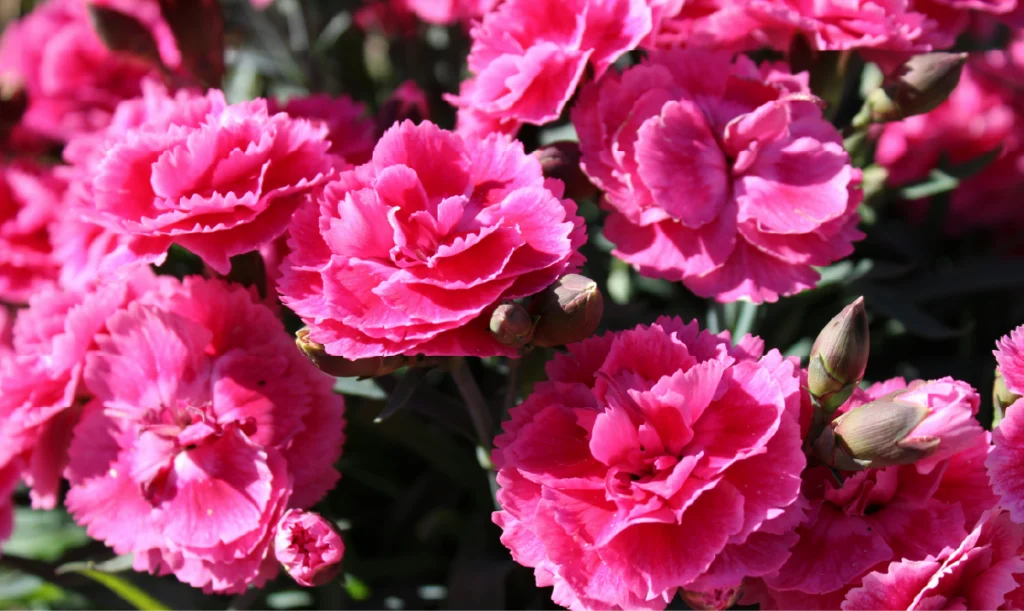
Interestingly, the English word “pink” didn’t originally refer to the color. It once meant “small” or “neat,” coming from the Dutch word pinck. The color name came later, inspired by the pink flower (genus Dianthus). By the late 1600s, the word pink was finally used to describe the pale red shade we know today.
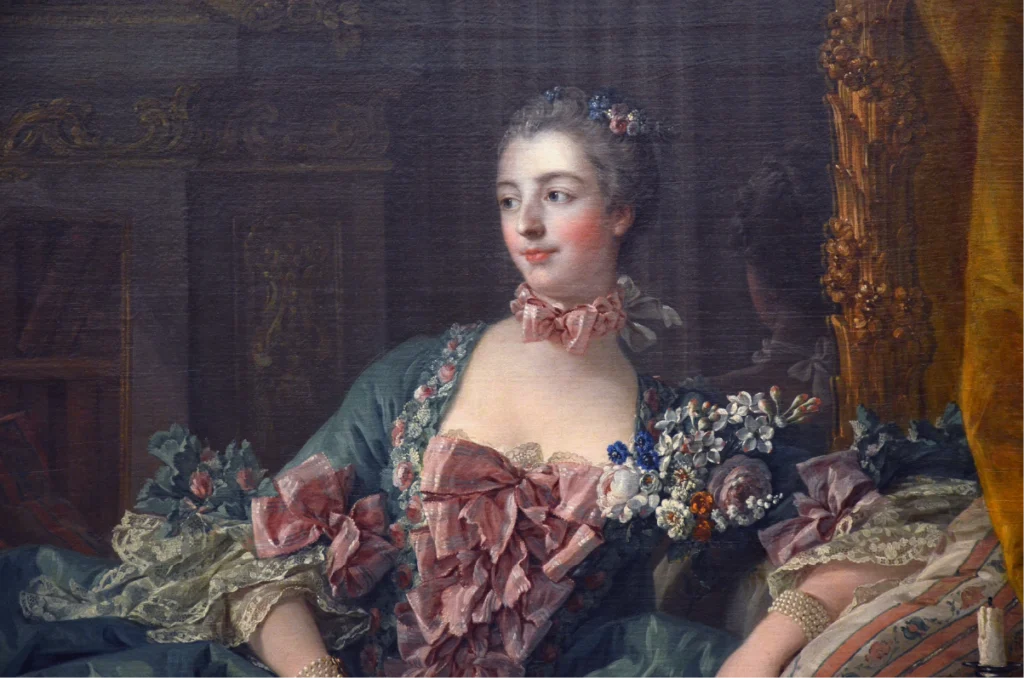
During the 1700s, pink became highly fashionable across Europe for both men and women. The French aristocracy loved soft pastel tones, and pink silk garments were considered symbols of luxury and sophistication. Men of status proudly wore pink coats, waistcoats, and accessories. Madame de Pompadour(King Louis XV’s mistress) famously popularized the shade now known as Pompadour Pink or Rose Pompadour.
With the Industrial Revolution, new chemical dyes made brighter, more vivid pinks widely accessible, and the color gradually became linked with childhood innocence. Interestingly, pink still wasn’t considered a “girls’ color” at the time. Baby boys were often dressed in pink because it was seen as a lighter, youthful version of red, a color symbolizing strength and traditional masculinity.
By the mid-1900s, Western marketing had begun reshaping society’s understanding of color. In the United States in particular, manufacturers began assigning colors to genders, promoting pink for girls and blue for boys. Pink was aggressively promoted as feminine, soft, charming, and domestic. This association deepened after World War II, when men returned to wearing darker, military-inspired clothing, while women were encouraged to leave wartime jobs and return to homemaking. The color essentially became a tool for reinforcing gender norms.
From the late 20th century onward, the use of pink expanded across diverse cultural contexts, from punk rebellion and breast cancer awareness to pop culture, fashion, and modern gender-neutral design, reshaping traditional interpretations of pink color psychology.
Pink Color Psychology: Meaning and Emotional Impact
Pink holds a unique place in color psychology. Because its meaning has evolved throughout history, the color has been used to evoke very different emotions in the human mind. From associations with traditional masculinity in earlier centuries to modern ideas of romance and softness, pink color psychology has changed dramatically. As a result, people perceive the color pink in many different ways.
As discussed earlier, pink was largely gender-neutral until the mid-1900s. It was marketing and branding that reshaped pink into a “girls’ color” and strongly associated it with femininity. This shift clearly shows how powerful marketing and cultural messaging can be in shaping perceptions of color.
In modern color psychology, pink is often linked to feelings of calmness, warmth, romance, softness, and comfort. While pink is relatively rare in nature, humans have introduced it extensively into everyday life, from pink foods and clothing to packaging and interior design. Pink naturally draws attention without feeling aggressive or overwhelming. As a tint of red created by adding white, pink carries red’s energy, softened by white’s sense of peace, making it a gentle and emotionally soothing color.
In color therapy, pink is often used to help reduce feelings of aggression, anger, and resentment. Spaces decorated with pink tones can feel warm, welcoming, and uplifting, creating a sense of comfort and happiness.
That said, too much pink can feel overwhelming or come across as overly sweet, naive, or emotionally intense. When used thoughtfully, however, pink becomes intuitive and emotionally insightful, expressing tenderness, kindness, empathy, and sensitivity. It gently reconnects people with their nurturing side, whether through offering care to others or allowing themselves to receive emotional support. Because pink evokes a sense of hope and reassurance, it’s often used to create calm, emotionally supportive environments.
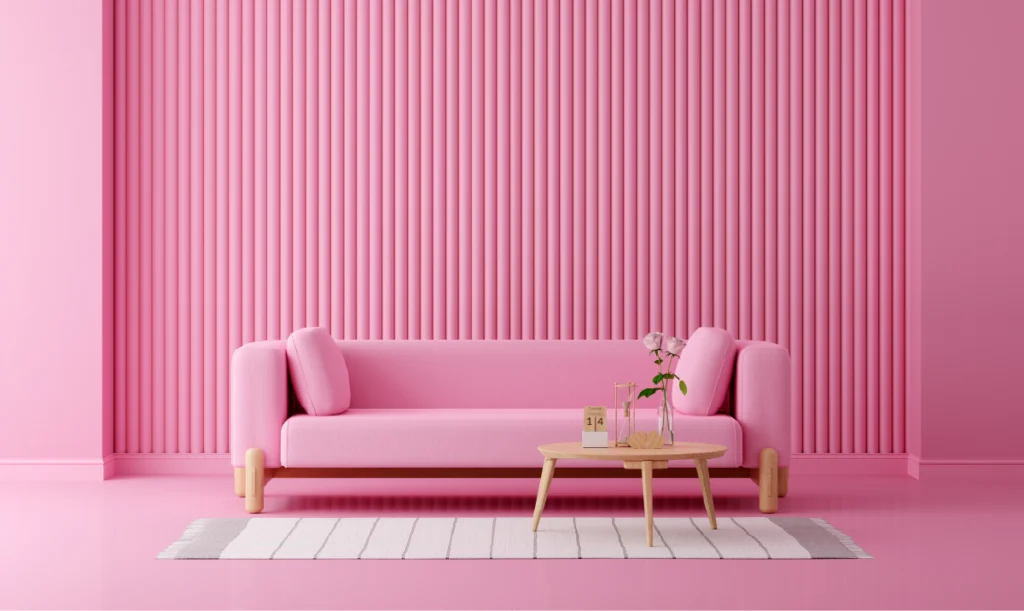
Pink communicates emotion without words. As a color linked to compassion and sensitivity, it helps foster warmth and understanding. When used in fashion, interiors, or visual design, pink creates an approachable and empathetic atmosphere. Pink is commonly used in healthcare spaces to create a calming environment that helps ease anxiety and promote comfort.
Different shades of pink evoke distinct emotional responses and moods. More muted shades of pink represent youth, peacefulness, and innocence, while bolder variations suggest boldness, excitement, and sensuality. Hot pink, in particular, feels joyful, full of life, energy, and character. “Millennial pink,” a lighter shade of pink, has been widely adopted by companies recently because it’s considered gender-neutral and not strongly associated with traditional femininity. This pink variation feels youthful and approachable.
Pink is a profoundly emotional and versatile hue shaped by history, culture, and human psychology. From calm and comfort to romance and expression, pink’s meaning shifts with context, shade, and intention. When used thoughtfully, pink becomes a powerful tool in design, branding, and everyday spaces, capable of communicating warmth, hope, and emotional connection without saying a single word.
Pink Personality: What Does a “Pink Personality” Say About You

People who love pink are often deeply caring, empathetic, and protective. They focus on offering unconditional love to the people around them. Pink personalities tend to be sweet, charming, and sensitive, with a natural desire to spread positivity and believe that things will eventually work out. Their emotional depth enables them to understand and respond to others’ feelings with ease. Many also see themselves as distinctly feminine in energy or expression.
Pink personalities are usually playful as well; the color often evokes childhood memories, innocence, and joy. Because pink blends the energy of red with the calmness of white, people drawn to it are naturally nurturing and often take on caring roles with children, partners, and loved ones. This gentle balance also makes them inherently romantic.
However, like any color personality, pink has its challenging traits. Under stress, pink personalities can appear immature, mainly because of their optimism and emotional intensity. They may lean toward naivety, avoiding conflict or difficult realities. Since pink is not an aggressive color, those who identify with it may struggle with self-confidence and assertiveness. As a result, they can become overly dependent on others rather than relying on themselves.
Positive Traits of a Pink Personality
- Playful – Brings light-hearted, cheerful energy to interactions.
- Nurturing – Naturally caring, gentle, and supportive toward others.
- Optimistic – Sees the bright side and believes things will work out.
- Approachable – Feels warm, friendly, and easy to talk to.
- Calm – Creates a soothing, peaceful presence.
- Youthful – Radiates freshness, innocence, and a young spirit.
- Sensitive – Deeply in tune with emotions and the feelings of others.
Negative Traits of a Pink Personality
- Immature – May seem childish or lacking emotional maturity.
- Naive – Trusts too easily or overlooks realities.
- Not Confident – Struggles with self-assurance or standing firm.
- Dependent – Relies too much on others for support or decisions.
- Unrealistic – Holds idealistic expectations that don’t match reality.
- Extra Sensitive – Emotions rise quickly and feel hard to manage.
Why don’t we see Pink in Color Wheels?
Pink is not included in any standard 12-color wheel, whether it’s RGB, CMYK, or RYB. The reason is simple: traditional color wheels only display pure hues, not tints, shades, or tones. Pink is created by mixing red with white, which technically makes it a tint of red rather than a standalone hue. Since the purpose of the 12-color wheel is to organize fully saturated hues around a circular structure, any color created by adding white, black, or gray is excluded.
For this reason, standard color wheels do not include:
- Tints (hue + white)
- Shades (hue + black)
- Tones (hue + gray)
Although pink plays a significant role in design, branding, and psychology, it belongs to the red color family rather than existing as a primary, secondary, or tertiary color. That’s why pink is widely used in practice but never shown as a main color on the wheel.
Global Perspectives on Pink: Cultural Meanings and Symbolism

Like every color, pink carries different symbolic meanings and interpretations across cultures worldwide. In Western cultures, pink is often linked to femininity and love. Beyond these associations, pink is also commonly used to indicate the birth of a daughter in gender-reveal celebrations. In fashion, pink lingerie has become increasingly popular, reinforcing the color’s association with softness, intimacy, and romance.
Various communities have also embraced pink as a color of protest and awareness. Pink triangles, once used by the Nazis in concentration camps to identify homosexual men, were later reclaimed in the 1970s as a powerful symbol of gay activism. Elsewhere, pink has become internationally synonymous with the fight against breast cancer, most notably through the pink ribbon. In the United States, female protesters have often worn pink to express ownership of their sexual, reproductive, and social rights. The transgender pride flag, designed in 1999 by Navy veteran Monica Helms, features pastel pink stripes to represent the identity of transgender women.

In Europe and the United States, pink is commonly associated with sweet foods and beverages. In consumer culture, toys aimed at girls often prominently feature pink in both packaging and product design, reinforcing its long-standing cultural associations.
In Japan, pink is most commonly associated with spring and new beginnings, and both men and women widely embrace the color. Interestingly, pink has also been historically linked to the samurai. Across India, pink is frequently seen in cultural festivities, with strong ties to Hindu traditions. However, in many Middle Eastern cultures, pink does not carry a distinct or widely recognized symbolic meaning.
In Korea, pink represents trust. In Latin America, pink has strong ties to architecture. Mexico’s vibrant colonial buildings are a clear example of how the color is woven into cultural identity. In Switzerland, pink has even been used in prison cells; when you understand pink color psychology, the reasoning becomes clear. The color is known to have a calming yet mentally stimulating effect, helping reduce aggression and promote emotional balance in inmates.
Most religions do not have strong or direct associations with the color pink. Renaissance artists frequently used pink to represent divine humanity, and in Christian symbolism, the color is associated with love, compassion, and joy. However, pink does not carry the same widespread symbolic meaning as some other colors. In other major religions, such as Buddhism, Islam, and Judaism, pink does not have close associations or specific symbolic meanings.
This shows that the way a color is perceived depends significantly on the culture a person is born into. Understanding the cross-cultural meanings of colors deepens your knowledge of pink color psychology and helps you use it more effectively in your projects.
Using Pink in Branding, Marketing, and Design: Practical Uses of Pink Color Psychology
Feminine brands have traditionally adopted pink as a primary color. However, today, many well-known brands use pink as their primary brand color across industries not usually associated with femininity, highlighting the broader possibilities of pink in marketing and branding. Pink represents a wide range of emotions, from fun, youth, and romance to softness, innocence, bold energy, sophistication, and more. Because of this versatility, choosing the right shade of pink can be challenging. This is why a solid understanding of pink color psychology is essential when selecting the most effective shade for your projects.

When it comes to brands that use pink, perhaps Barbie is the most iconic example. Barbie uses bright pink as its signature color, paired with its instantly recognisable handwritten logo. This combination evokes feelings of joy, childhood, and creativity, helping the brand connect emotionally with its young audience and remain instantly recognisable. Pink’s nostalgic charm gives Barbie its magical appeal and illustrates how color psychology can deepen a brand’s emotional impact.
Feminine brands in the fashion, cosmetics, and lifestyle industries widely use pink to evoke femininity, romance, and luxury, making it an essential part of their brand identities. Well-known lingerie brands such as Victoria’s Secret use pink to connect with their core female audience, applying it strategically across branding and retail spaces to create a youthful, romantic, and luxurious feel. Similarly, the cosmetics brand Mary Kay uses soft, feminine pink tones in its logo and products to communicate friendliness, elegance, and empowerment while appealing directly to women.
Pink is commonly used by snack and dessert brands, including Baskin-Robbins and Voodoo Doughnut, to convey joy and playful energy. In the toy industry, pink is widely used to represent youthfulness, fun, and traditionally feminine themes, as seen in iconic brands like My Little Pony. Disney‘s identity as “the happiest place on Earth” is reinforced through its use of pink in Disney Parks’ color trends, helping create a joyful and welcoming atmosphere.

T-Mobile, a major U.S. wireless network provider, uses a bold magenta pink as its brand color to express confidence and energy while clearly differentiating itself from competitors. Dunkin’ (formerly Dunkin’ Donuts), a major fast-food and beverage brand, uses vibrant orange and pink to make its brand and store environments feel approachable, cheerful, and fun.
Pepto-Bismol has used pink color psychology exceptionally well. Its signature pink color, created using red dyes like Red 22 and Red 28, was originally chosen to make the medicine less intimidating and more appealing to children, while also benefiting from pink’s calming psychological effects. Lyft, a ride-hailing company, has developed a pink brand identity to appear friendlier and more approachable. Vineyard Vines uses pink successfully, proving it can work for both men’s and women’s fashion when aligned with a preppy aesthetic. Although financial companies rarely use pink in their branding, Lemonade, an insurance company, uses pink to stand out from its more traditional competitors.
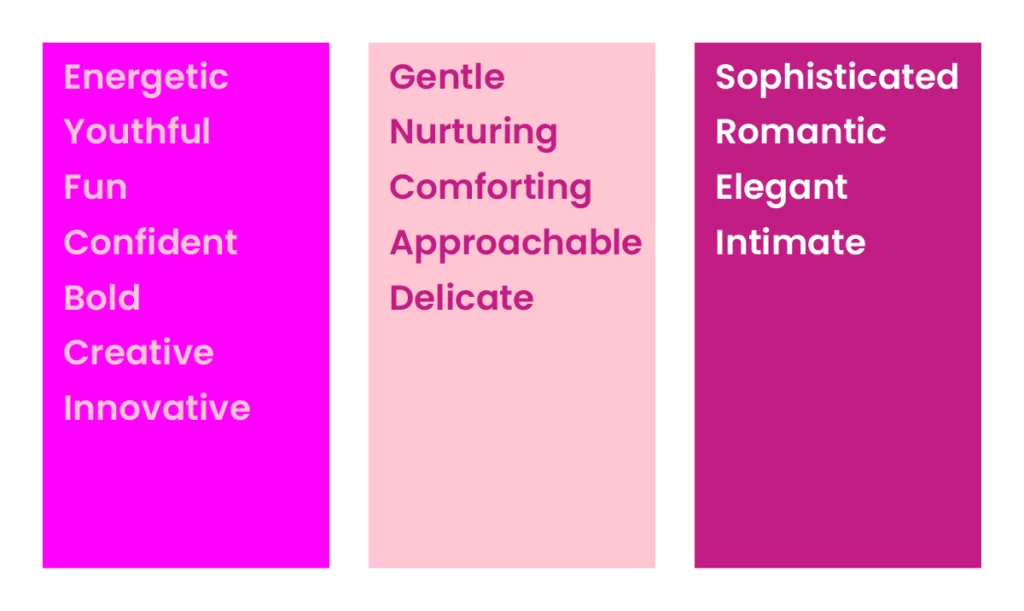
In pink color psychology, the color offers excellent flexibility in branding and marketing, but its effectiveness depends on selecting the right shade to convey the intended message. Bright or hot pinks, such as magenta and fuchsia, communicate energy, youthfulness, fun, boldness, confidence, creativity, and innovation. These attention-grabbing shades help fashion, entertainment, tech startups, and disruptive brands connect with younger or more adventurous audiences.
Pastel or baby pinks are soft, gentle shades that create a calm and comforting feel. They’re commonly associated with innocence, nurturing, and emotional care, which is why they’re widely used in baby products, wellness brands, healthcare spaces, and traditional feminine branding. These lighter pinks help convey warmth, compassion, and trust, and when used thoughtfully, they can also feel elegant and refined in both luxury and minimalist designs.
Often associated with seduction and strength, darker pinks are widely used in high-end fashion and luxury branding to attract established audiences. In contrast, millennial and dusty pinks have a soft, muted quality that feels modern and inclusive, which is why they fit naturally within contemporary lifestyle, cosmetics, and hospitality brands.
Coral and salmon pinks, with their warm orange undertones, convey optimism, energy, and approachability. These shades are frequently used in wellness, food, and beauty branding to appeal to younger audiences. Rose and burgundy pinks, deeper and richer in tone, communicate romance, maturity, power, and premium quality, making them well-suited for high-end, floral, and luxury-oriented industries. Peachy pink, with its gentle warmth, creates a welcoming and friendly feel, which is why it’s commonly used in beauty and lifestyle products.
Using pink effectively in marketing and branding requires a clear understanding of your message and audience. Choosing pink should be a strategic brand decision, not a personal color preference. Factors such as audience demographics, cultural context, competition, and long-term brand goals all play a role. When guided by pink color psychology, businesses can create emotionally resonant brand identities and marketing campaigns that communicate their message clearly and build meaningful connections.
When to Avoid Pink: Cases Where the Color Fails
Pink often carries a negative perception among some people, especially boys, due to its long-standing association with girls and women. As a result, the color is frequently criticized for reinforcing gender stereotypes and limiting how femininity is perceived. Within the context of pink color psychology, this can make pink a poor choice for brands that strongly align with traditional masculinity. In industries such as banking, finance, law, and corporate services, pink can appear immature, childish, or inauthentic. That’s why these sectors often rely on more serious colors like blue or black, which convey trust, stability, and professionalism and help maintain brand credibility.
Using too much pink can also be ineffective, as brighter shades may feel overwhelming. Extra care should be taken when using pink in settings such as hospitals and spas, where calmness and balance are essential. While pink can evoke elegance, playful or bright shades may not work well for high-end luxury brands targeting mature or older audiences. Pink conveys nurturing emotions, but using the wrong shade can make it feel overly sentimental or unnatural.
Pink may clash with brands rooted in natural or earthy aesthetics, as it rarely appears in organic environments. When used without a clear strategy or authentic brand alignment, pink can weaken a brand’s message. If misapplied, it risks appearing clichéd, juvenile, or disconnected from the brand’s genuine values. Successfully using pink color psychology in branding and marketing requires a strong understanding of its evolving cultural significance and psychological complexity.
Pink Color Conversions: RGB, CMYK, HEX, and More
| Value | |
| HEX | #FFC0CB |
| RGB Decimal | 255, 192, 203 |
| RGB Percentage | 100%, 64.7%, 0% |
| CMYK | 0%, 25%, 20%, 0% |
| HSB | 350°, 2500%, 10000% |
| HSL | 350°, 100%, 88% |
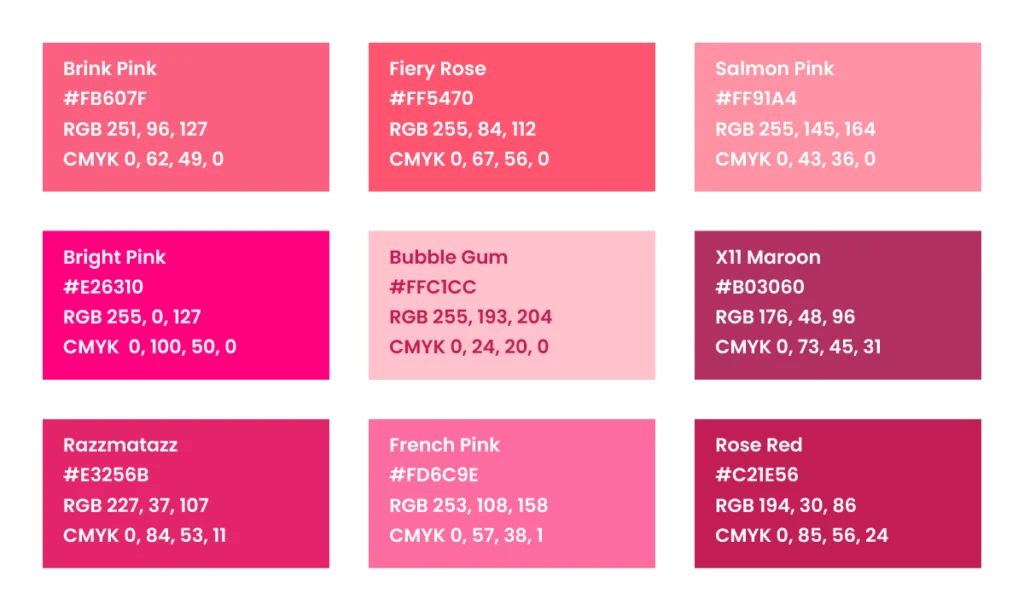
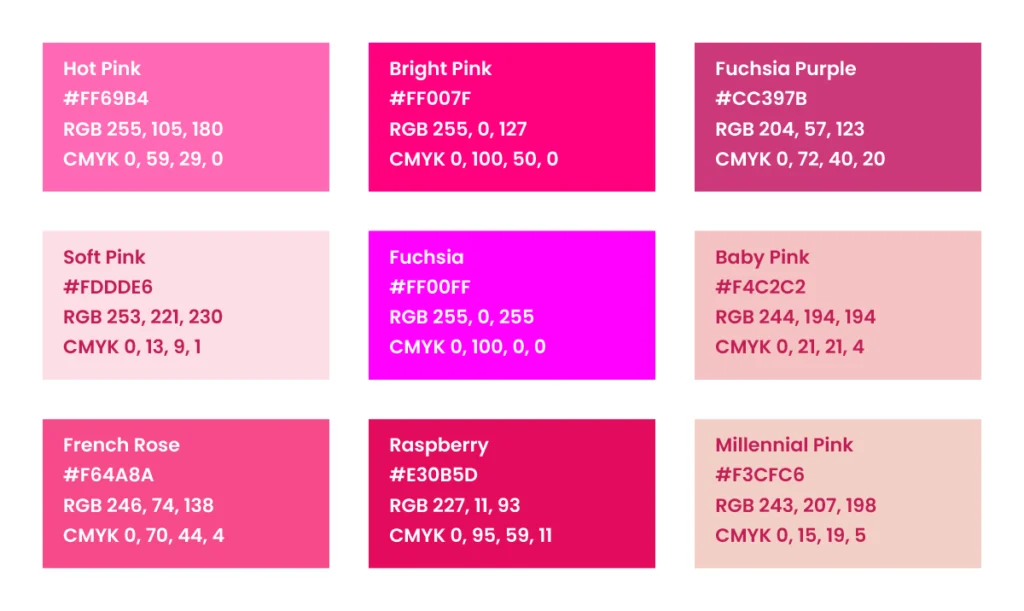
Popular Pink Hues
To Sum It All Up
As we come to the end of this pink color psychology post, it’s clear that pink is a fascinating, and sometimes controversial, color with meanings far more complex and versatile than its common stereotypes suggest. Shaped by history, culture, marketing influences, and human psychology, pink has evolved through many roles and associations, ranging from softness and nurturing to boldness, youthfulness, and innovation, depending on the shade and context in which it’s used. This versatility gives pink a wide range of possibilities in branding and marketing. We hope this guide has given you everything you need to understand pink color psychology and use it effectively to build strong emotional connections with your audience.
What’s the most important thing you learned about pink color psychology? Are you planning to use pink in your projects? Let us know your thoughts in the comments below. If you’re looking for insights into specific colors, feel free to send us a message. And don’t forget to check out our other color psychology posts, and follow us on Pinterest and Instagram for more design insights. See you in the next post!
Note: All logos and brand names used in this blog post are the property of their respective owners and are used strictly for educational and informational purposes only.