Colors are often reduced to simple emotional shortcuts; white is linked to purity, yellow to happiness, but color psychology is far more nuanced than these surface associations suggest.1
What does the color purple symbolize?
Purple occupies a unique psychological space, blending the stability of blue with the intensity of red to create meanings that range from creativity and imagination to power, luxury, and spirituality.
In this article, we explore purple color psychology in depth, examining its symbolic meanings, emotional impact, and practical applications in branding and visual communication.
You’ll also learn how designers and brands can use purple strategically, when it strengthens a brand message and when it may work against it.
Table of Contents
What Does the Color Purple Symbolize? Color Psychology of Purple
Purple is formed by mixing equal amounts of red and blue, making it a secondary color. By blending the intensity and dynamism of red with the calmness and stability of blue, purple occupies a psychologically balanced position between these two opposing forces.2
This distinctive blend enables purple to shape emotions and thought processes in nuanced ways, creating associations that feel both energizing and composed. However, the psychological meanings of purple are not universal; they shift depending on the specific shade and the context in which the color is used.
It is also important to recognize that these responses are shaped by cultural context, social conditioning, and individual experience.3 As a result, purple color psychology, like color psychology as a whole, is nuanced and requires careful consideration when applied in visual design and branding.
Royalty and Exclusivity: How Purple Became a Symbol of Luxury & Status
Although purple is widely accessible today, its dye (tyrian purple)4 was once exceptionally rare and expensive to produce, limiting its use for centuries to kings, queens, and other elite social classes. This exclusivity forged strong associations with wealth, power, and royalty, shaping how people learned to interpret the color over time.
What does the color purple symbolizes in modern contexts remains deeply influenced by this historical legacy. As a result, purple color psychology continues to carry connotations of luxury, royalty, opulence, and elevated status. In branding and visual communication, purple is therefore often used to signal premium quality, aspirational value, and refined elegance rather than everyday accessibility.
Creativity and Innovation: The Cognitive Dimension of Purple
Purple is commonly associated with creativity and imaginative thinking. In color psychology, it is believed to stimulate curiosity, abstract thought, and exploratory reasoning by blending the emotional energy of red with the calm introspection of blue. This combination encourages unconventional thinking and artistic expression, allowing individuals to explore new ideas and concepts while remaining mentally composed.
When surrounded by purple, the mind is often freer to move through spaces of innovation and originality. As a result, what does the color purple symbolizes in creative contexts extends beyond artistic expression to include innovation, unconventional ideas, and intellectual exploration.
Wisdom, Spirituality, and Sacredness: Purple’s Higher Meanings

During periods when purple was rare and reserved for the nobility, high priests were also regarded as members of the elite. Senior clergy and bishops wore purple garments to signify moral authority, spiritual leadership, and preparation, while temples and religious rituals often incorporated purple fabrics to denote sacred spaces and ceremonial importance.5
From a color theory perspective, purple emerges from the fusion of energetic red and calming blue, creating a visual balance that encourages contemplation and higher understanding. Building on these historical and perceptual foundations, modern color psychology commonly associates purple with wisdom, spirituality, and a sense of the sacred.
Magic & Mystery: The Mystical Side of Purple
Unlike green or blue, true purple is rare in nature; many objects described as “purple” are closer to reddish-violet or bluish-magenta. This scarcity leads people to perceive purple as an unusual or even unnatural color. Over time, such rarity has encouraged associations with what exists beyond everyday reality, an imaginative space where magic and mystery naturally emerge.
From a scientific perspective, purple does not exist as a single wavelength of light. Instead, it is a perceptual construct created by the brain through the combined interpretation of red and blue stimuli, rather than a distinct physical frequency.6 This perceptual quality gives purple a cognitive, symbolic, and inherently mysterious character.
Psychologically, purple sits between the opposing qualities of red and blue, placing it in a liminal state, neither fully material nor fully rational, neither grounded nor detached. Such liminal conditions are widely associated with magic, mystery, and the unknown.
Purple’s historical rarity, high cost, and restricted use by the ruling and priestly classes further strengthened its association with hidden knowledge, esoteric power, and secrets reserved for elites. Because magic and mystery depend on exclusivity, purple came to visually encode these ideas long before the rise of modern psychology. Once linked to priests, oracles, alchemists, and ritual spaces, purple developed enduring associations with mystery and magic that continue to persist today.
Positive Associations of Purple color
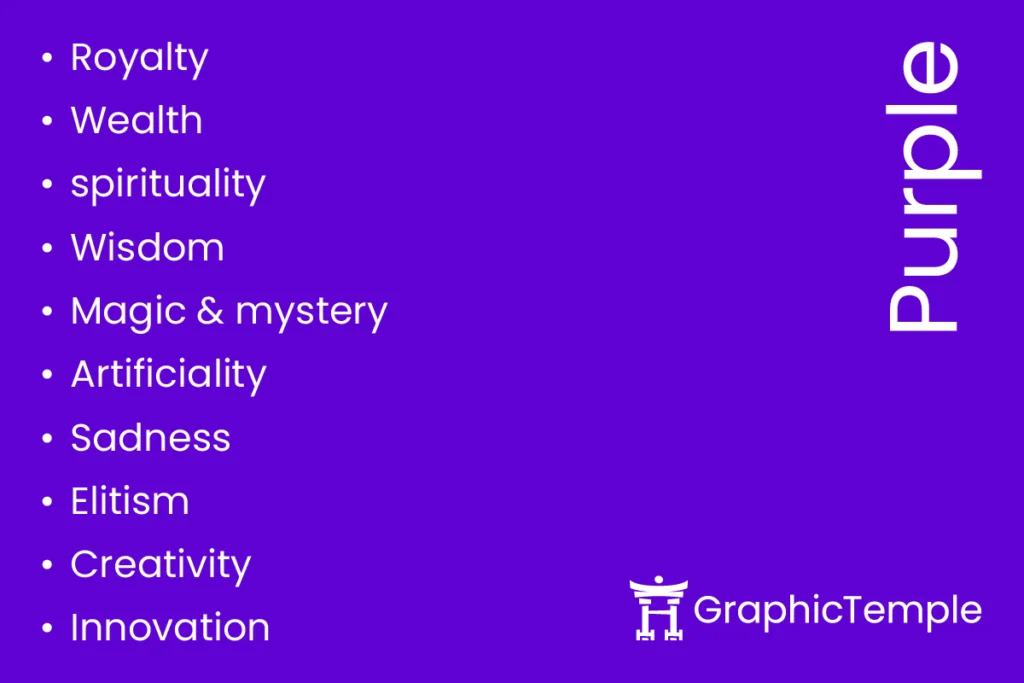
- Wealth, prestige & royalty: Signifies historical power, status, and elite authority.
- Femininity: Lighter purples communicate softness and refined femininity.
- Creativity, imagination & innovation: Represent imaginative and innovative thinking.
- Wisdom, spirituality, and sacredness: Color is associated with wisdom and spiritual meaning.
- Magic & mystery: Evoke mystery and the unknown.
- Calmness: Cooler purples promote calm and introspection.
- Individuality: Signals uniqueness and nonconformity.
Negative Associations of Purple color
- Artificiality and unnatural feel: Purple may appear artificial because it is rare in nature.
- Emotional distance: Dark purples can create emotional detachment.
- Elitism: Purple may signal exclusivity that feels socially distant.
- Arrogance: Excessive use of purple can suggest arrogance or superiority.
- Sadness: Muted purples may evoke a sense of melancholy or emotional heaviness.
The Role of Purple in Branding and Its Best Uses
Purple carries a wide range of symbolic meanings and visual variations, making it a flexible but demanding color in branding. Its effectiveness depends not only on understanding what does the color purple symbolizes, but also on selecting the appropriate shade, cultural framing, and industry context. Audience expectations, market conventions, and brand positioning all influence whether purple strengthens a brand’s identity or creates ambiguity.
When applied intentionally, purple can communicate authority, distinction, creativity, or prestige. When used without strategic alignment, however, it may feel artificial, confusing, or misaligned with brand values. The following sections examine how purple functions across key branding contexts and how designers can apply it responsibly.
Premium and High-End Luxury Brands
Purple’s historical associations with royalty, wealth, and exclusivity make it a natural fit for premium and luxury brands. For centuries, purple symbolized privilege and elevated status, and this legacy continues to shape modern brand perception. When used with restraint, purple can signal premium quality, aspirational value, and refined elegance.
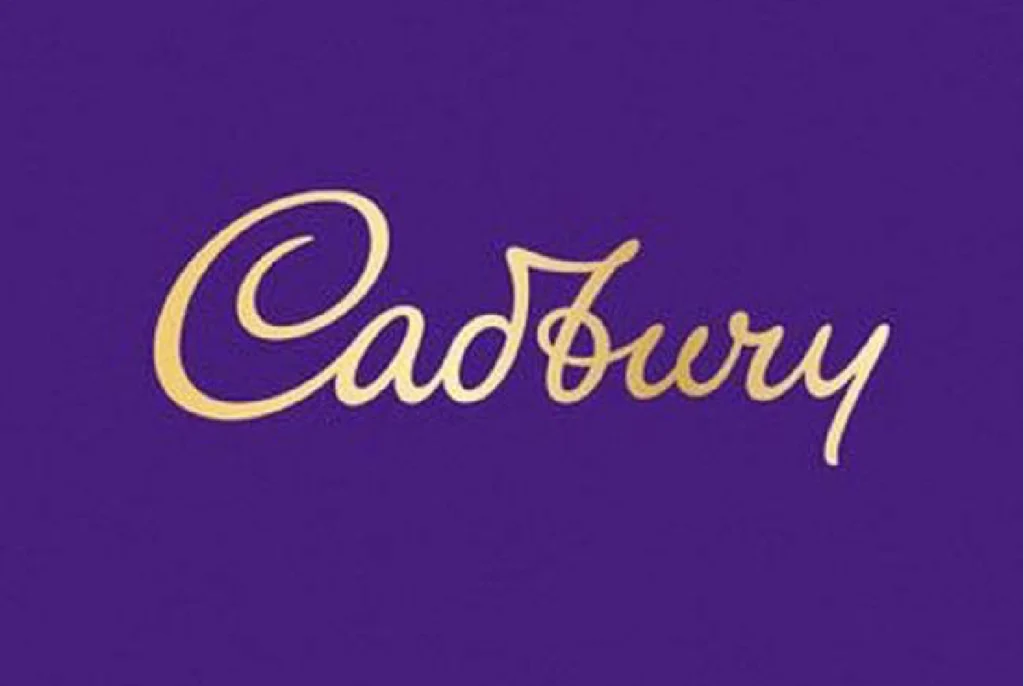
Cadbury is one of the most recognizable examples of purple in branding. Its deep purple has become so closely tied to the brand that Cadbury has pursued trademark protection for the color in certain markets, reinforcing associations with quality and indulgence.7
Another example is Crown Royal, which prominently uses purple throughout its signature velvet bag. In this context, purple functions as a visual and tactile marker of ceremony, luxury, and exclusivity rather than everyday consumption.
Designer takeaway: Purple works best in luxury branding when paired with minimalism, high-quality materials, and controlled color palettes. Overly bright or excessive use can weaken its premium signal.
Purple in Brands Targeting Female Audiences
Purple has frequently appeared in branding aimed at women and girls, particularly in softer shades such as lavender, lilac, and light violet. These tones are often perceived as expressive, gentle, and imaginative, making them suitable for wellness, fashion, beauty, and lifestyle brands. Importantly, this association is cultural rather than universal and varies across regions and time periods.

Curves, a women-only fitness brand, uses purple to create an environment that feels supportive and non-intimidating. In this context, purple helps shift gym culture away from aggression and competition toward encouragement and inclusivity.
Similarly, Babies R Us has historically incorporated purple color to communicate care, reassurance, and warmth in products aimed at parents of infants. Here, purple functions as a softer alternative to more dominant or corporate colors.
Designer takeaway: Purple should not be treated as inherently “feminine.” Its effectiveness depends on shade, tone, and emotional alignment with the target audience rather than gender assumptions.
Tech and Media Branding
Purple’s associations with creativity, originality, and individuality make it a compelling choice for tech and media brands seeking differentiation. Because purple is less commonly used than blue or black in technology sectors, it can help brands stand out while avoiding overly corporate or aggressive signals.

Twitch uses purple to emphasize creativity, digital culture, and individuality, resonating strongly with content creators and younger audiences.8
Roku uses purple to communicate entertainment and accessibility without excessive seriousness. The color helps the brand feel friendly, neutral, and family-oriented while remaining modern.9
Yahoo adopted purple early in the internet era to balance authority with personality. Its continued use reinforces emotional familiarity and brand recognition in digital culture.
Designer takeaway: In tech branding, purple works best when a brand wants to appear innovative, expressive, or human-centered rather than purely functional.
Purple in Sports Branding
Although relatively rare in sports branding, purple can be highly effective when used strategically. Most sports brands rely on red (aggression), blue (control), or black (power). Purple offers an alternative message: confidence, prestige, and composed authority rather than raw dominance.
Purple is also visually distinctive, making it easy to recognize and difficult to confuse with rival teams.
The Wimbledon Championships use purple to reflect heritage, ceremony, and elite tradition. Paired with green, the palette communicates continuity and institutional prestige.10

The Premier League uses purple to signal leadership and premium entertainment while remaining visually neutral for a global audience.11
The Los Angeles Lakers combine purple with gold to express legacy, authority, and excellence, with purple signaling tradition and gold reinforcing success.12
Designer takeaway: Purple is most effective in sports branding when the goal is to convey elite status, legacy, or professionalism rather than intimidation.
Education Brands and Universities
Educational institutions often avoid colors that feel aggressive (red), overly corporate (blue), or authoritarian (black). Purple offers a balanced alternative, helping institutions communicate intellectual depth, wisdom, and higher-order thinking.
Historically, purple has been associated with scholarship, elite knowledge, and institutional authority. In modern education branding, it also balances creativity and discipline, making it suitable for universities, research institutions, and liberal arts schools.
New York University is a prominent example. NYU’s use of purple conveys academic prestige without feeling distant or elitist. The color’s warmth and cultural openness align with the university’s urban, diverse, and globally connected identity.13
Designer takeaway: In education branding, purple works best when paired with clarity, restraint, and strong typography to avoid appearing abstract or inaccessible.
Closing Insight
Purple offers broad branding opportunities, but only when its symbolic meaning, cultural context, and visual execution are clearly understood. Knowing what does the color purple symbolizes allows designers to move beyond trends and apply the color with intention, responsibility, and strategic clarity.
Limitations and Risks of Using Purple in Branding
Purple is a powerful color, but it is not universally effective. In the wrong context, it can reduce clarity, trust, or relevance. Like any color, purple can be a poor branding choice if used without careful consideration of what does the color purple symbolizes, the cultural setting, and the preferences of the target audience.
Following trends blindly can undermine a brand, preventing purple from becoming a timeless part of its identity. Overuse can also weaken its impact, as excessive purple may convey sadness, emotional distance, heaviness, artificiality, or even pretentiousness.
For this reason, pairing purple with complementary colors and applying it strategically is essential for effective branding.
Purple in Fast Food and Impulse-Driven Industries

Purple tends to feel cognitively demanding and reflective rather than immediate or instinctive. Brands that rely on quick decisions, impulse purchases, or physical appetite often perform better with colors like red, yellow, or orange. In industries such as fast food, convenience retail, and flash-sale commerce, purple can appear slow, emotionally distant, or even slightly unnatural.
Why Purple Can Be Risky in Construction, Logistics, and Utility Branding?
Purple tends to signal imagination and abstraction rather than realism. For industries built on practical reliability, it can sometimes appear vague or unserious. In sectors such as logistics, construction, and essential utilities, using purple may be risky, as colors like blue, green, or neutral tones more clearly convey stability and dependability.
Cultural Meanings of Purple and Global Branding Risks
Purple’s symbolism isn’t universal. In some cultural contexts, it can be interpreted as a sign of mourning, spiritual stepping back, or artificialness. artificiality. For brands operating globally, purple should be tested carefully, or avoided altogether, unless strong cultural alignment is clearly established.
Purple in Male-Oriented Branding: When It Weakens Perceived Strength
Purple is a color that tends to soften expressions of power. For brands built around raw strength, masculinity, aggression, or physical dominance, it can undermine the intended message. As a result, purple is often less effective for brands targeting predominantly male audiences. Potential mismatches include combat sports, fitness, and military branding. Unless the goal is to convey elite sophistication rather than force, purple may dilute the overall impact.
Purple Color Conversion
| Value | |
| HEX | #800080 |
| RGB Decimal | 128, 0, 128 |
| RGB Percentage | 50%, 0%, 50% |
| CMYK | 60%, 100%, 14%, 3% |
| HSB | 300°, 10000%, 5000% |
| HSL | 300°, 100%, 25% |
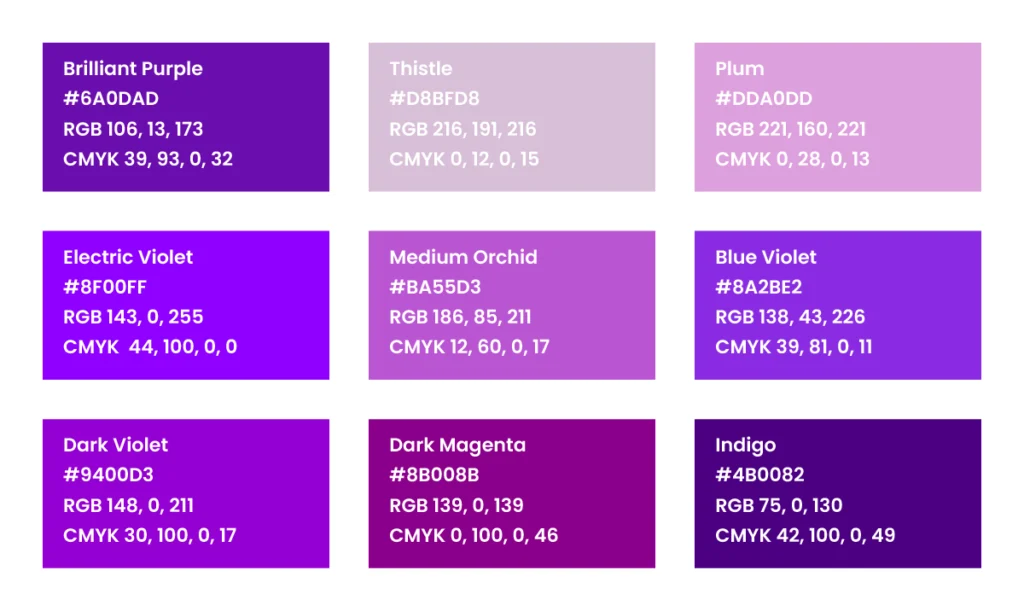
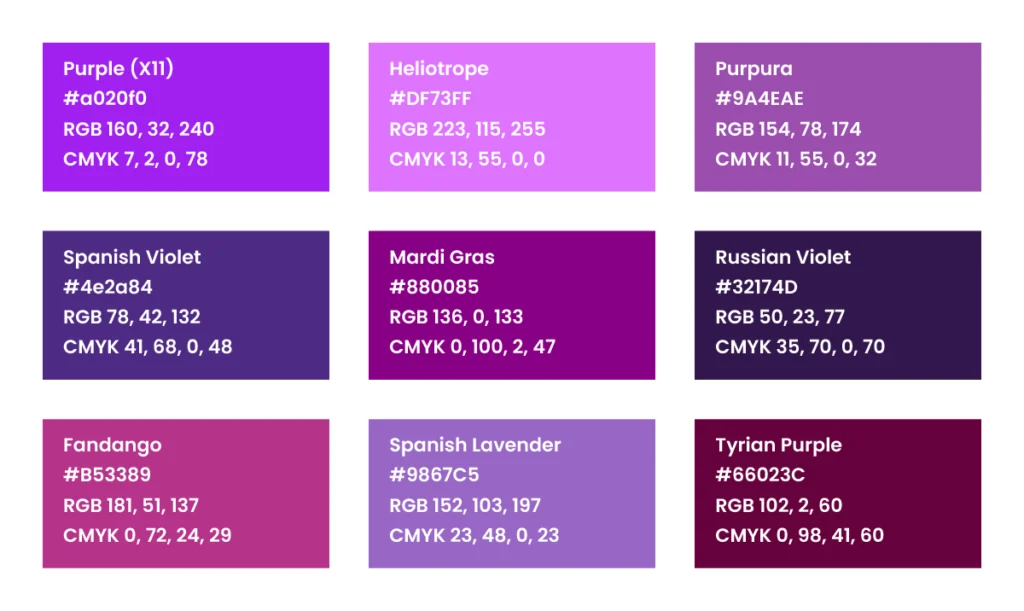
Shades of purple
In Conclusion
Purple is a symbolically versatile color with a wide range of meanings across cultures and contexts. With its rich history, it can evoke associations of royalty, power, and creativity, as well as mystery, magic, or even artificiality, depending on how and where it is used.
For designers seeking to understand what does the color purple symbolizes, it is essential to study how different cultures interpret purple and how brands across industries worldwide have successfully incorporated it into their logos and visual identities.
If you have any questions about What does the color purple symbolizes or how to use purple effectively in your brand, we’d be happy to help. Feel free to leave a comment or reach out to us. Follow Graphic Temple on Pinterest, Instagram, and our other social channels to stay updated on practical design knowledge and inspiration.
Related Color Psychology Guides
10 Sources
- Kurt, S., & Osueke, K. K. (2014). The effects of color on the moods of college students. SAGE Open, 4(1), Article 2158244014525423
- Wikipedia. RYB color model
- Elliot AJ. Color and psychological functioning: a review of theoretical and empirical work. Front Psychol. 2015 Apr 2;6:368. doi: 10.3389/fpsyg.2015.00368. PMID: 25883578; PMCID: PMC4383146.
- University of Chicago Library. (n.d.). Tyrian Purple. In The Origins of Color. from University of Chicago Library.
- Ecclesiastical Sewing. The profound symbolism of violet in Christian liturgy.
- NASA. Visible light.
- Pinsent Masons. Cadbury ruling offers guide to registering colour-based trade marks
- Twitch. Nice to meet you again, for the first time.
- ADWEEK. Why Streamers Have Embraced Purple, Usually a Divisive Color for Brands
- Manchester Digital. Why is Wimbledon Branding Purple and Green?
- Medium. A Closer Look at the Premier League’s Breathtaking New Design
- The Sporting Blog. Los Angeles Lakers Colors and Logo: A History and Color Codes
- New York University. University Traditions